


Small-Scale Rotating Electromechanical Systems: Explaining anomalies and energy consumption using basic concepts of momentum and energy conservation.
- kimayadeshpande18
- Aug 21, 2024
- 1 min read

In this, post, I will be covering 2 questions:
When θ (angle between area vector of coil and magnetic field) becomes 0, then torque 𝜏 acting on the coil becomes 0, since 𝜏 = NIABsinθ - and hence, the coil should stop rotating. Why does this not happen?
If constant torque is applied, then how do rotating machines do not undergo angular acceleration to give abnormally high speeds?
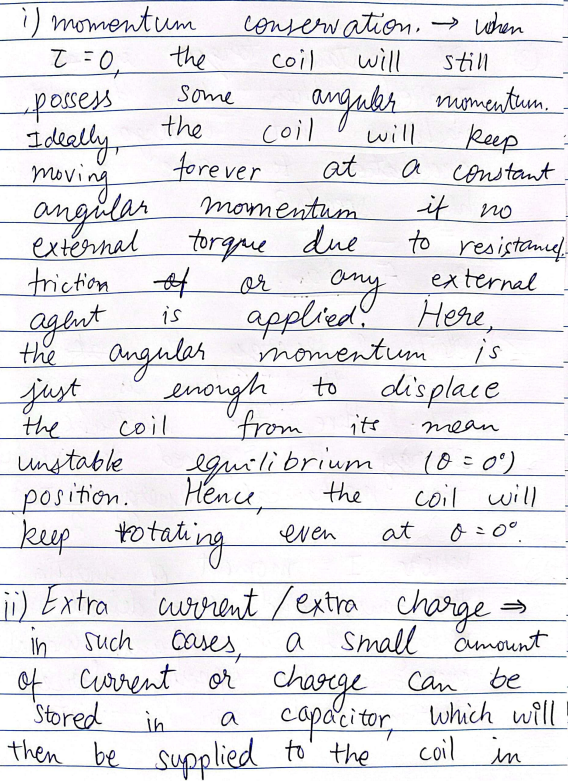
Question 1: When θ (angle between area vector of coil and magnetic field) becomes 0, then torque 𝜏 acting on the coil becomes 0, since 𝜏 = NIABsinθ - and hence, the coil should stop rotating. Why does this not happen?
Answer 1:

Question 2: If constant torque is applied, then how do rotating machines do not undergo angular acceleration to give abnormally high speeds?
Answer 2: (considering the example of a fan)


Comments